Hair Loss
June 15, 2026
·
read
Topical vs Oral Minoxidil: How to Choose What's Right for You


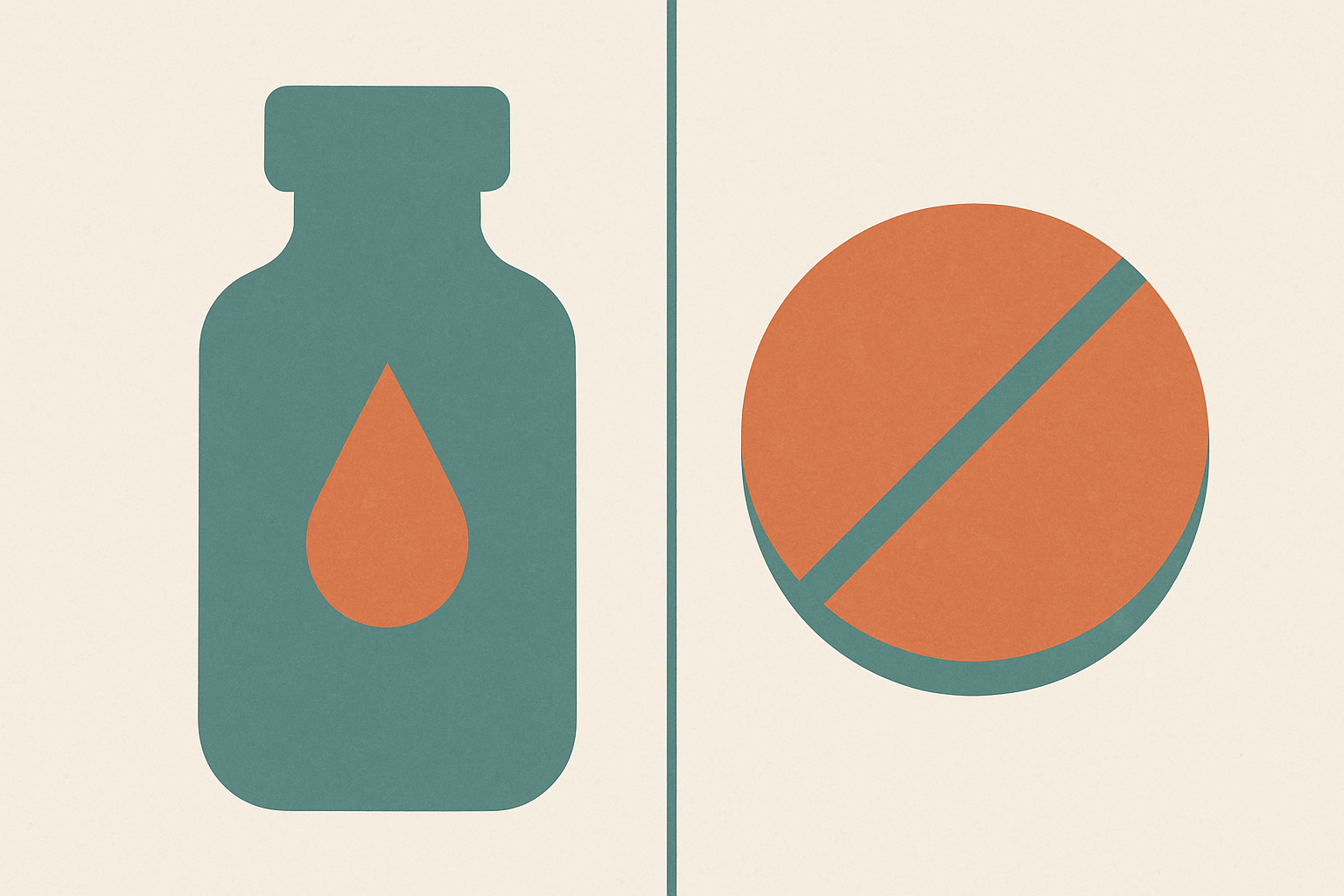
Minoxidil comes up often in hair loss discussions, and one question men ask is whether topical or oral is the better choice. The honest answer is that this is a clinical decision, not something to settle from online comparisons. At Noah, we think it helps to understand the basic distinction — while being clear that whether minoxidil is suitable at all, and in which form, is a matter for a doctor's assessment.
This article is general education, not medical advice. Minoxidil use requires assessment by a licensed Singapore doctor.
The distinction is straightforward in concept: topical minoxidil is applied to the scalp, while oral minoxidil is taken by mouth. Both are forms of the same medication used in certain types of hair loss. The practical experience of using each differs, and so do the considerations a doctor weighs. The key point is that "topical versus oral" isn't a simple preference — it's a clinical choice that depends on the individual and is made with a doctor.
It can be tempting to pick a form based on convenience or what you've read, but suitability depends on factors a doctor assesses — your situation, your type of hair loss, your health, and the considerations relevant to each form. What's appropriate for one person may not suit another. This is exactly why minoxidil, in either form, should be used as directed by a doctor rather than self-selected. The choice is part of a proper assessment, not a standalone decision.
Whichever form is being considered, the starting point is the same: a doctor confirming whether minoxidil is appropriate for your type of hair loss in the first place, since it isn't right for everyone. From there, a doctor can advise on the suitable form and how to use it. This assessment matters because it ensures the approach fits your actual cause and situation, rather than applying a treatment generically based on online enthusiasm.
Regardless of form, a couple of general principles apply. Hair responds slowly, so any approach takes time before meaningful changes might be noticed, and results vary between individuals and aren't guaranteed. Any benefit also generally depends on continued use as directed — stopping typically means the gradual return of pattern hair loss. Understanding this upfront helps you make an informed decision and stick with an approach if it's right for you.
Before the topical-versus-oral question even arises, the more important step is confirming whether minoxidil is appropriate for your type of hair loss at all — it isn't right for everyone. Only once that's established does the choice of form become relevant, and even then it's a clinical decision a doctor makes based on your situation. Picking a form based on convenience or online opinion skips this. Getting the order right — suitability first, form second — ensures any approach genuinely fits your cause rather than being applied generically.
Regardless of form, the same general principles apply. Hair responds slowly, so any approach takes time before meaningful changes might be noticed, and results vary between individuals and aren't guaranteed. Any benefit also generally depends on continued use as directed — stopping typically means the gradual return of pattern hair loss. Understanding this upfront helps you make an informed decision and stick with an approach if it's right for you. A doctor can explain what's realistic and how to use whichever form is appropriate for your situation.
It's worth speaking to a licensed doctor if you've noticed thinning or a receding hairline and are considering minoxidil, or if you're weighing topical versus oral and want proper guidance. A doctor can assess whether minoxidil is suitable for you, advise on the appropriate form, and explain realistic expectations.
Hair loss treatments require medical assessment. The choice between forms is a clinical one, not a self-directed pick.
If you want to know which approach suits your hair loss, a doctor can guide you. Noah connects you with MOH-licensed Singapore doctors through discreet, confidential online consultations. Start a consultation to discuss your hair loss.
This article is for general education and is not medical advice. A consultation with a licensed doctor is required before any treatment.
Minoxidil comes up often in hair loss discussions, and one question men ask is whether topical or oral is the better choice.