Many men hesitate to raise concerns about testosterone with a doctor — partly because the symptoms feel private or embarrassing, partly because the conversation feels like it might be dismissed. This short guide is about making that conversation more useful: what to think through beforehand, what to bring, what to ask, what to expect, and what to do if the conversation doesn't go the way you'd hoped.
No items found.
Many men hesitate to raise concerns about testosterone with a doctor — partly because the symptoms feel private or embarrassing, partly because the conversation feels like it might be dismissed. This short guide is about making that conversation more useful: what to think through beforehand, what to bring, what to ask, what to expect, and what to do if the conversation doesn't go the way you'd hoped.
Why preparing the conversation matters
A 15-minute consultation is short. A man who walks in with a clear sense of what has changed, when, and how it is affecting his life is going to get more out of the time than one who arrives unsure of how to describe what he is feeling. Doctors are working with what you tell them; the more concrete your information, the more useful the consultation.
What to think through beforehand
Before the consultation, mentally walk through these questions. You don't need to write them all down, but it helps to have rough answers ready.
What specifically has changed? Energy? Libido? Erectile function? Mood? Sleep? Strength? Weight? Try to be specific rather than "I just don't feel like myself."
When did it start, roughly? Months ago? A year? Gradual or sudden? Was there a trigger — a major life change, a new medication, an illness?
How is it affecting you? Work? Relationship? How you feel about yourself? The clinical conversation can be different depending on whether it's a minor irritation or significantly distressing.
What have you already tried? Sleep, weight, exercise, alcohol changes, supplements? What worked, what didn't?
What are your fertility plans? Whether you want children in the foreseeable future affects what treatment options are appropriate.
What medications and supplements are you currently taking?
What to bring
A list of your current medications, including supplements and over-the-counter products
Any previous blood test results, particularly testosterone or hormone-related ones
Any other relevant medical reports from the past few years
Your fertility considerations (mentally if not on paper)
Useful questions to ask the doctor
Depending on the stage you are at, useful questions include:
First consultation
Based on what I've described, is a testosterone test appropriate?
If so, what does the test involve and what does it measure?
What other conditions might explain my symptoms?
Should we check anything else at the same time?
After testing
Where does my result fall — normal, borderline, or low?
Given my symptoms, what does the result actually mean for me?
Do we need a repeat test before any decisions?
If reversible factors are part of the picture, which ones would you prioritise?
If we were to consider treatment, what are the options and trade-offs?
How does fertility figure into this?
If considering TRT
What form would you recommend for me and why?
What side effects am I most likely to experience?
What monitoring will we do, and how often?
What's the time commitment and the realistic cost?
If I want to stop, how would we approach that?
What to expect from the conversation
A good consultation should feel like a partnership, not a sales pitch. A reasonable Singapore-licensed doctor will take your symptoms seriously, look at the broader picture (not just the testosterone number), explore reversible factors, and be honest about what TRT can and cannot do.
Be wary of:
A doctor who recommends TRT on the basis of symptoms alone, without testing
A doctor who promises specific outcomes ("guaranteed energy boost," "transformative results") — these claims are also restricted under Singapore advertising regulations
A doctor who dismisses your symptoms without offering alternative investigations
A treatment plan that doesn't include monitoring
If your concerns aren't taken seriously
Some men report that their concerns about low testosterone or related symptoms are dismissed in primary care. If you feel this has happened to you, options include:
Asking for the specific test (testosterone, ideally with LH/FSH/prolactin/TSH) so you have data to anchor the conversation
Seeking a second opinion, particularly with a clinician who specialises in men's health
Considering a telemedicine consultation, which can sometimes feel less rushed and more private
You don't need to push for a specific treatment. You do reasonably get to ask for an investigation when your symptoms are real and persistent.
Speak to a Singapore-licensed doctor on Noah
On Noah, your consultation is conducted online with a Singapore-licensed doctor, in a discreet and unrushed way. You can book a confidential consultation here. Bring the questions above and a clear sense of what has changed.
BMI provides an estimate of weight classification. For a thorough analysis of your weight and medical options, arrange a teleconsult with a Noah doctor.
*Medical treatment may not be appropriate for you even if you have a high BMI
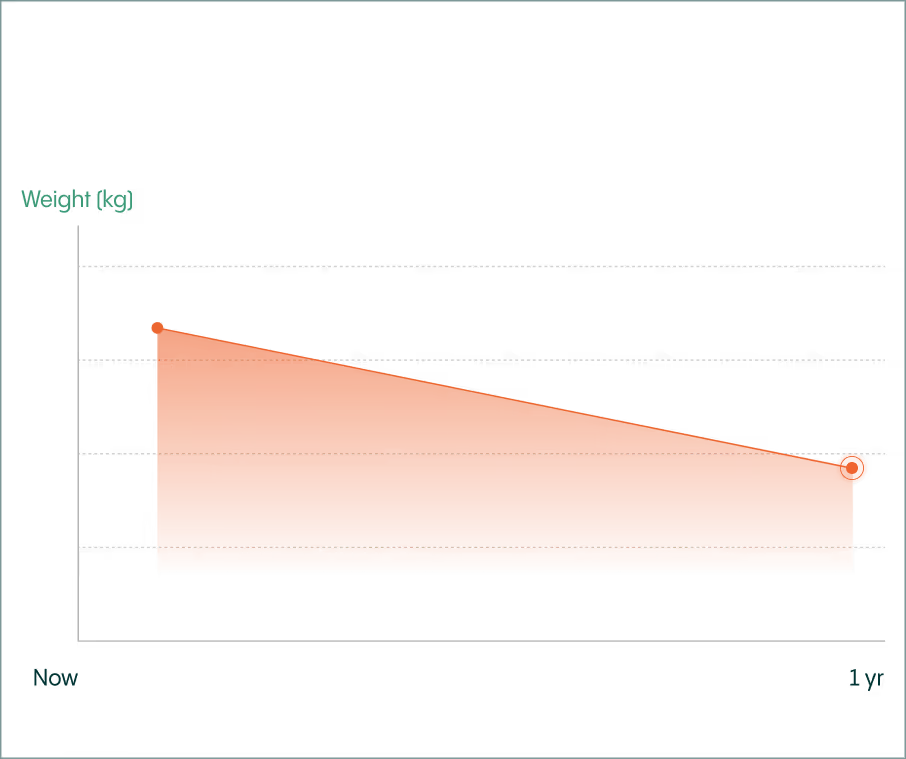
Your estimated weight loss in 1 year*
-
00
kg
-9%
90
kg
78
kg
99
81
63
*In a 72-week clinical trial of 2,539 adults with obesity or overweight (without diabetes), participants taking the highest dose of GLP-1 + GIP alongside diet and exercise.
No items found.
Medically Reviewed by
Noah Clinical Team
Written by our Editorial Team
Last updated
21/5/2026
disclaimer
Articles on Noah are for informational purposes only and do not replace medical advice from a qualified doctor. To consult on Noah, click here. Noah's editorial standards are described on our editorial standards page.
References
Bhasin S, et al. Testosterone Therapy in Men With Hypogonadism: An Endocrine Society Clinical Practice Guideline. JCEM. 2018;103(5):1715–1744.
Mulhall JP, et al. Evaluation and Management of Testosterone Deficiency: AUA Guideline. 2018 (updated 2023).
Singapore Medical Council. Ethical Code and Ethical Guidelines. 2016 edition.