Hormonal Health
May 21, 2026
·
5 mins
read
Obesity and Low Testosterone: How They Feed Each Other


Of all the lifestyle factors that lower testosterone in men, excess body fat — particularly visceral abdominal fat — is one of the most reliable and one of the most reversible. The relationship is bidirectional and self-reinforcing. This guide explains the loop and what actually breaks it.
Of all the lifestyle factors that lower testosterone in men, excess body fat — particularly visceral abdominal fat — is one of the most reliable and one of the most reversible. The relationship is bidirectional and self-reinforcing. This guide explains the loop and what actually breaks it.
For broader context, see our complete guide to low testosterone.
Aromatase activity. Fat tissue contains the aromatase enzyme, which converts testosterone to oestrogen. More fat, more aromatase, more testosterone converted away — effective testosterone drops.
Insulin resistance and inflammation. Obesity is associated with chronic low-grade inflammation and reduced insulin sensitivity. Both suppress the hypothalamic-pituitary-testicular axis.
Sleep apnoea. Obstructive sleep apnoea is much more common in overweight men. It fragments sleep, reduces REM, and suppresses testosterone production.
Reduced LH pulsatility. Severe obesity directly affects the pituitary's ability to produce normal pulses of luteinizing hormone, the signal that drives testosterone production.
Lower testosterone reduces muscle mass and impairs insulin sensitivity, which in turn shifts the body towards fat storage and away from muscle preservation. The reduced energy and motivation that often accompany low T also make sustained training and dietary effort harder. The result is a metabolic environment that resists the very interventions needed to break out of it.

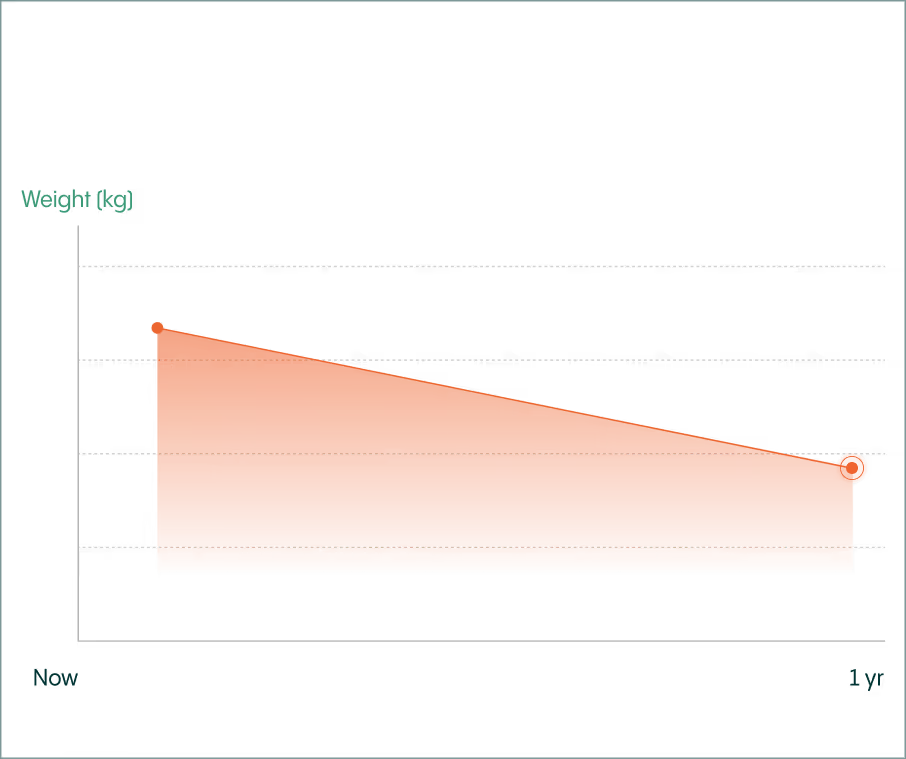
The evidence base on weight loss and testosterone is encouraging:
For an overweight man with suspected low testosterone:
In many overweight men, meaningful weight loss does substantially improve testosterone. The degree of recovery varies; some men also benefit from medical treatment alongside.
It's a treatment for severe obesity, with restoration of testosterone as one of the documented benefits in many cases. It's not used specifically to treat low T — but for men where it's medically indicated, the hormonal improvements are real.
TRT is appropriate for confirmed hypogonadism, not as a weight loss intervention. In men with both conditions, TRT can support body composition shifts alongside lifestyle work, but using it primarily for weight loss is not the right indication.
If you suspect obesity is interacting with hormonal changes in your case, you can book a confidential consultation with a Singapore-licensed doctor on Noah.

Articles on Noah are for informational purposes only and do not replace medical advice from a qualified doctor. To consult on Noah, click here. Noah's editorial standards are described on our editorial standards page.

Corona G, et al. Body weight loss reverts obesity-associated hypogonadism. European Journal of Endocrinology. 2013.
Wang C, et al. Low testosterone associated with obesity. Diabetes Care. 2011.