Hormonal Health
May 21, 2026
·
5 mins
read
Losing Muscle Despite Training? When Hormones May Be the Reason


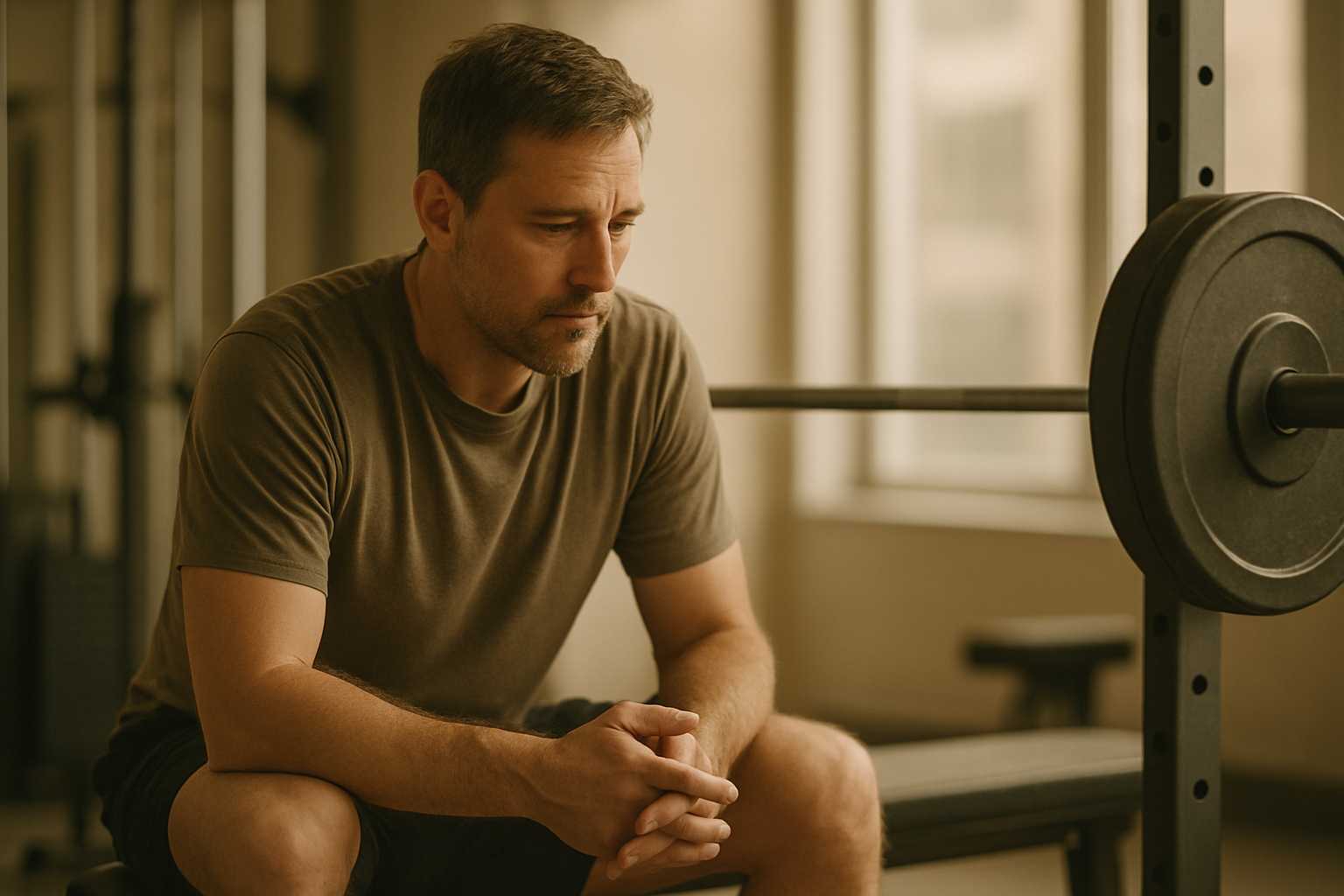
There's a particular kind of frustration that comes from training as hard as you used to and slowly watching the results fade. Strength stalls. Recovery takes longer. The shape of your body changes despite your effort. Sometimes this is age. Sometimes it's training programme or nutrition. And sometimes it's hormonal. This guide explains when low testosterone is likely to be part of the picture.
There's a particular kind of frustration that comes from training as hard as you used to and slowly watching the results fade. Strength stalls. Recovery takes longer. The shape of your body changes despite your effort. Sometimes this is age. Sometimes it's training programme or nutrition. And sometimes it's hormonal. This guide explains when low testosterone is likely to be part of the picture.
For broader context, see our complete guide to low testosterone.
Testosterone supports muscle in several ways: it increases protein synthesis, reduces protein breakdown, and influences the body's response to training stimulus. When testosterone is low, the same training programme produces less muscle, slower recovery, and gradual strength loss.
Importantly: testosterone is not the only factor. Sleep, nutrition (particularly protein and total calories), training programme quality, age-related sarcopenia, and chronic stress all matter. Low T is one possible contributor, often alongside others.
The hormonal angle becomes more plausible when muscle loss appears alongside:
If three or more of these match your experience, a testosterone test is reasonable. See our guide to testosterone testing in Singapore.
Before assuming hormones, check the simpler stuff:

The biggest levers, roughly in order of impact:
If testosterone is confirmed low and contributing, treatment can meaningfully improve muscle response to training — but it works alongside training and nutrition, not instead of them.
TRT in men with confirmed low testosterone, combined with appropriate training and nutrition, typically increases muscle mass over 3–6 months. In men with normal testosterone, TRT is not appropriate and using it for muscle gain is misuse.
Some age-related muscle loss (sarcopenia) is normal, but it's gradual. Noticeable decline despite consistent training within a few years usually has an identifiable contributor.
Sleep and nutrition changes can show in training response within 2–6 weeks. Treating low testosterone shows muscle changes over 3–6 months in most men.
If you suspect hormones are part of why your training isn't producing the results it used to, you can book a confidential consultation with a Singapore-licensed doctor on Noah.

Articles on Noah are for informational purposes only and do not replace medical advice from a qualified doctor. To consult on Noah, click here. Noah's editorial standards are described on our editorial standards page.

Bhasin S, et al. Endocrine Society Clinical Practice Guideline. JCEM. 2018.
Storer TW, et al. Effects of testosterone supplementation on muscle mass, strength and function. JCEM. 2017.
Morton RW, et al. A systematic review of protein supplementation for muscle mass. BJSM. 2018.