Hormonal Health
May 21, 2026
·
9 mins
read
Natural Ways to Support Healthy Testosterone: What the Evidence Actually Shows


If you've spent any time on the internet looking up how to raise your testosterone, you have probably encountered some genuinely useful advice mixed in with a lot of supplement marketing and pseudoscience. This guide separates the two. What follows is what the clinical evidence actually supports, what is plausible but unproven, and what is mostly noise. Most of the meaningful interventions are not pharmaceutical.
If you've spent any time on the internet looking up how to raise your testosterone, you have probably encountered some genuinely useful advice mixed in with a lot of supplement marketing and pseudoscience. This guide separates the two. What follows is what the clinical evidence actually supports, what is plausible but unproven, and what is mostly noise. Most of the meaningful interventions are not pharmaceutical.
For background on what low testosterone is and when it warrants medical assessment, see our complete guide to low testosterone.
There is a difference between (a) restoring testosterone in a man whose level has been lowered by lifestyle factors, and (b) raising testosterone above the normal range in a man whose level is already healthy. The first is largely possible. The second is largely not, and pursuing it is generally not useful.
Almost all the evidence-based interventions below work by removing things that suppress testosterone — not by stimulating production beyond what your body would otherwise do. If your testosterone is in the normal range and your lifestyle is already in order, lifestyle changes won't make you produce "super-physiological" levels. That's not how the system works.
A landmark 2011 study by Leproult and Van Cauter, published in JAMA, found that one week of restricted sleep (5 hours per night) in healthy young men reduced their daytime testosterone by 10–15%. That is a substantial effect from a single week. Chronic sleep restriction — the kind many busy professionals live with — has a sustained suppressive effect.
The practical implication: getting 7–9 hours of consistent, decent-quality sleep is one of the most effective things most men can do for their testosterone. If you have untreated sleep apnoea (snoring, daytime fatigue, witnessed pauses in breathing), getting that assessed and treated is often the single biggest move you can make.
See also our deeper article on sleep and testosterone.
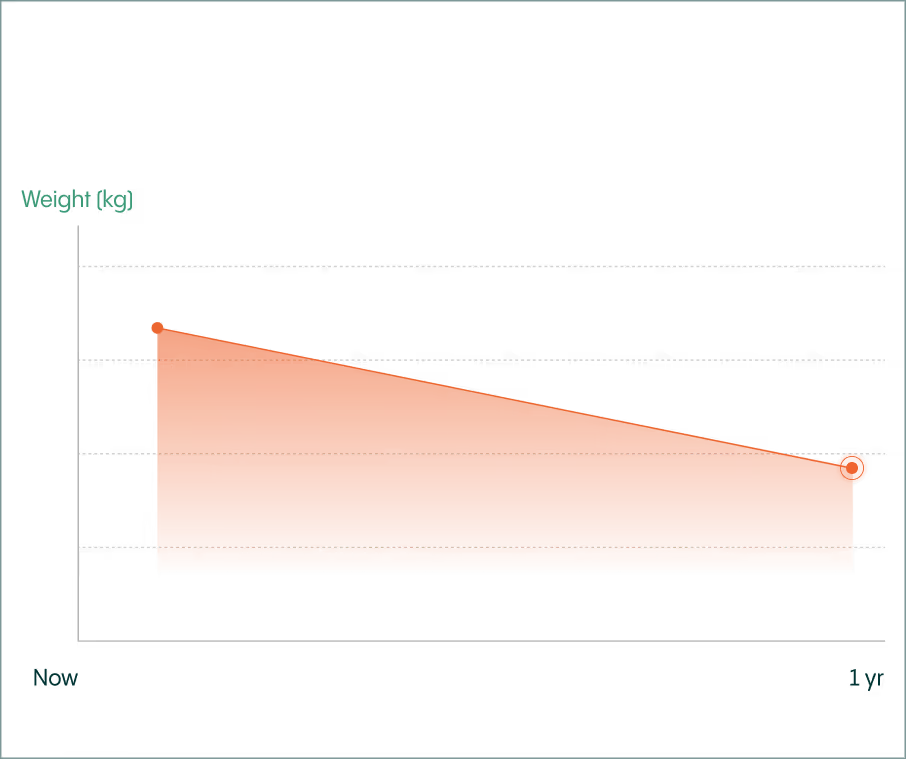
Aromatase, an enzyme present in fat tissue, converts testosterone to oestrogen. The more body fat — particularly abdominal fat — a man carries, the more aromatase activity, and the more circulating testosterone is converted to oestrogen. The result is lower effective testosterone.
A 2014 study found that men with obesity had 40–50% lower testosterone than men of healthy weight. Weight loss in overweight men consistently improves testosterone. This is one of the most reliable interventions in the literature.
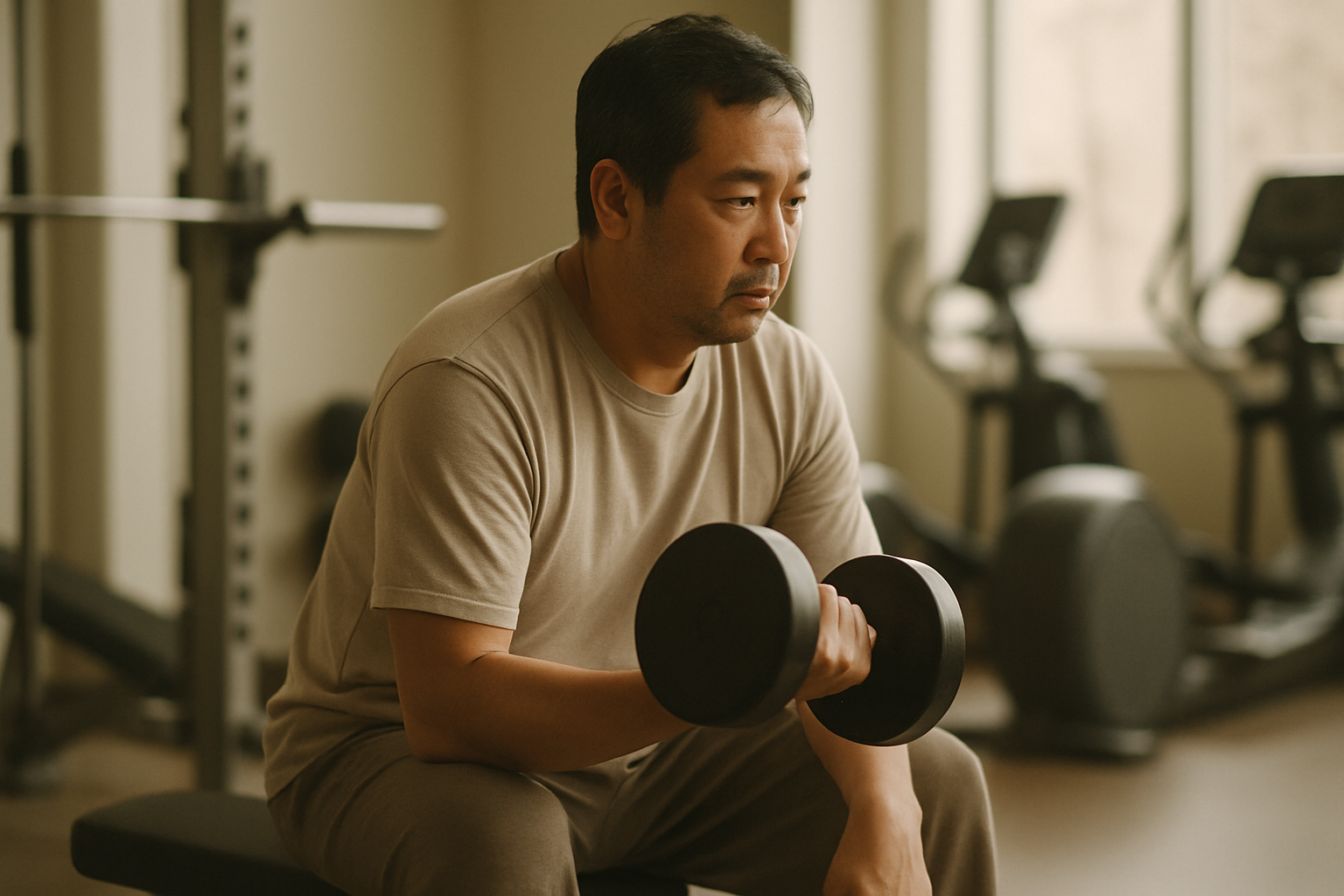
Resistance training does not dramatically raise testosterone in men with normal levels, despite what some marketing suggests. What it does is preserve muscle mass and bone density, improve insulin sensitivity, and counteract many of the changes that come with low testosterone. For a man with low or borderline testosterone, regular compound-lift training is one of the more useful interventions.
A practical structure: 2–4 strength training sessions per week, focused on compound movements (squats, deadlifts, presses, rows), with appropriate progressive overload. Specific protocols matter less than consistency.
Heavy alcohol use suppresses testosterone through multiple mechanisms, including direct damage to testicular Leydig cells. Moderate drinking has less clear effects, but if you are concerned about testosterone and you are drinking more than recommended limits, reducing intake is a reasonable lever.
Chronic stress raises cortisol, which suppresses the hypothalamic-pituitary-gonadal axis. The evidence base for specific stress-management techniques as a testosterone intervention is thinner than for sleep or weight, but the broader case is well-established: men with sustained high stress, particularly when combined with poor sleep, tend to have lower testosterone. Whatever approach works for you sustainably — exercise, meditation, therapy, time management — is the right one.
There is no single "testosterone diet." The general principle that supports testosterone the most is the same principle that supports cardiovascular and metabolic health: a diet adequate in protein, with reasonable amounts of healthy fats, plenty of vegetables, and not too much processed food and sugar.
Specific findings worth knowing:
There is no single "testosterone superfood." Be sceptical of marketing that claims otherwise.
A few supplement ingredients have meaningful (though modest) evidence behind them for men with documented deficiencies. None of them are a substitute for medical assessment, and none of them is a guaranteed testosterone booster in a man with normal levels.
Most other ingredients sold for "testosterone support" have minimal or absent evidence. Be especially sceptical of "natural testosterone boosters" with proprietary blends that don't disclose dosages.
Crucially: supplements are not equivalent to TRT. They cannot raise testosterone to the same degree, and they should not be used to self-treat confirmed hypogonadism.
A few interventions get heavily marketed but have minimal or contradictory evidence:
For men with significantly low testosterone and clear symptoms, lifestyle changes alone are often not sufficient. Improvements are usually partial. If your testosterone has been confirmed low on two morning tests and you have symptoms, lifestyle should still be addressed — but the conversation about additional treatment, including TRT where appropriate, is reasonable to have.
See our TRT explainer for what that pathway looks like.
Measurable changes in testosterone from lifestyle interventions typically take weeks to months — not days. Sleep improvements may show effects within 2–3 weeks; weight loss effects scale with the amount of weight lost and may take 3–6 months to fully reflect.
Acute (immediate post-workout) increases in testosterone happen, but they are short-lived. The longer-term effect of training on baseline testosterone in men with normal levels is modest. The benefit is more in preserving the things testosterone normally supports — muscle, bone, body composition — rather than in raising the hormone itself.
The evidence is modest. In men who are stressed, overweight, or have low-borderline testosterone, ashwagandha may have a small effect via cortisol reduction. It is generally well-tolerated. If you are considering it, speak to a doctor, particularly if you take other medications. It is not a treatment for hypogonadism.
Generally no. Lifestyle interventions restore testosterone when it has been suppressed; they do not push it above the normal range.
If you have addressed the lifestyle factors above and are still concerned about your testosterone, a clinical assessment is the next step. You can book a confidential consultation with a Singapore-licensed doctor on Noah.

Articles on Noah are for informational purposes only and do not replace medical advice from a qualified doctor. To consult on Noah, click here. Noah's editorial standards are described on our editorial standards page.

Leproult R, Van Cauter E. Effect of 1 week of sleep restriction on testosterone levels in young healthy men. JAMA. 2011;305(21):2173–2174.
Camacho EM, et al. Age-associated changes in hypothalamic-pituitary-testicular function in men. EMAS Study. 2013.
Lopresti AL, Smith SJ. Withania somnifera (Ashwagandha) for vitality in stressed men: A randomized, double-blind, placebo-controlled study. American Journal of Men's Health. 2019.
Bhasin S, et al. Testosterone Therapy in Men With Hypogonadism: An Endocrine Society Clinical Practice Guideline. JCEM. 2018;103(5):1715–1744.