Sexual Health
June 15, 2026
·
read
ED After Weight Loss: Why It Happens and When It Gets Better


You did the hard work — you lost the weight, your clothes fit better, your energy is up. So it can be genuinely confusing, even demoralising, when sexual function doesn't immediately follow. If you've noticed erectile changes during or after a weight-loss journey, you're asking a fair question, and you're not alone. At Noah, a Singapore telehealth platform with licensed doctors, this comes up more than people expect.
The reassuring headline: in the bigger picture, losing excess weight is generally good for erectile health. But the transition period can be bumpy, and understanding why helps.
Erectile function depends on a coordinated system — blood flow, hormones, nerves, and mood. Rapid changes in the body can temporarily unsettle parts of that system. A few possible factors a doctor may consider:
The point is that the dip many men notice can be a temporary feature of the transition rather than a permanent problem.
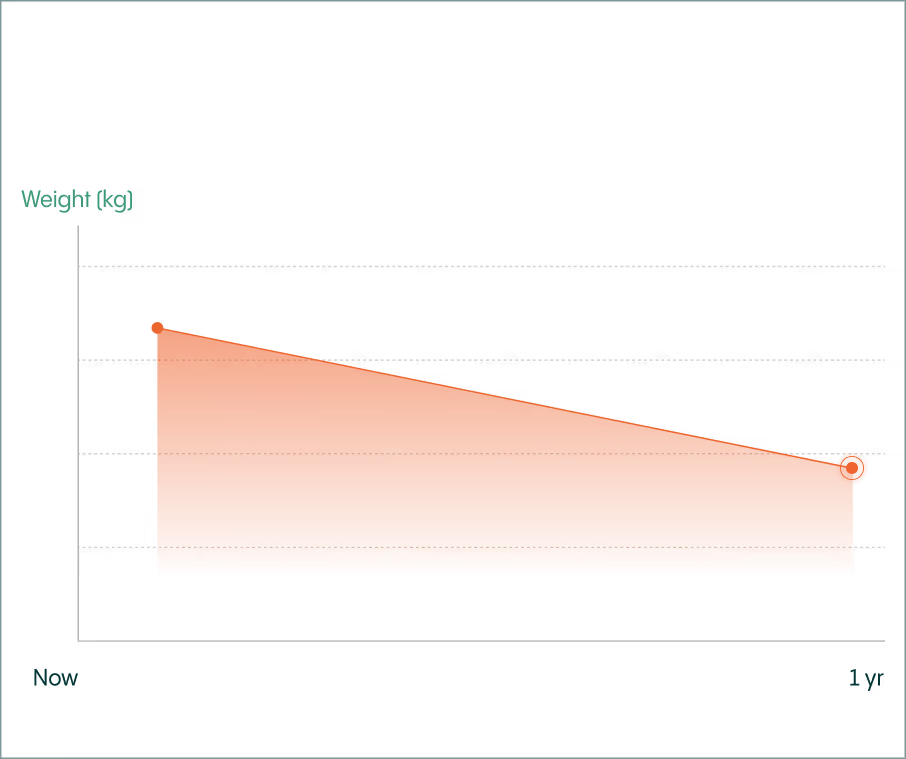
As weight loss stabilises and the body adapts, the cardiovascular and metabolic benefits tend to support better erectile function. Evidence indicates that reducing excess weight is associated with improvements in erectile health for many men, particularly where conditions like high blood pressure or blood sugar issues were factors. In other words, the long-term direction is usually positive — the early wobble doesn't define the destination.
If a crash approach is contributing to the problem, a more moderate, sustainable plan may help both your goals and your sexual health. A doctor or appropriate professional can help you find a pace that protects energy, sleep, and hormones rather than sacrificing them.
Consider a consultation if erectile difficulties persist well beyond the early adjustment period, if they're causing distress, or if you have other symptoms like ongoing low energy or low libido. ED can also be an early signal of underlying health factors, so a doctor can assess whether anything beyond weight loss deserves attention.
Losing weight is an achievement — and a temporary sexual health hiccup shouldn't undo your confidence. On Noah, you can speak privately with MOH-licensed Singapore doctors who can assess what's happening and advise on next steps. It's discreet and confidential. Start a consultation whenever you're ready.
This article is for general education and is not medical advice. A consultation with a licensed doctor is required before any treatment.
You did the hard work — you lost the weight, your clothes fit better, your energy is up. So it can be genuinely confusing, even demoralising, when sexual function doesn't immediately follow.