Weight Management
June 15, 2026
·
read
Body Composition vs Scale Weight: The Number That Actually Matters


For most people, the bathroom scale is the default measure of progress. But the number it shows can be misleading — especially during a structured weight-loss journey. At Noah, we encourage men to think beyond a single figure, because what your body is actually made of often matters more than what it weighs. Understanding body composition can change how you read your progress and how you protect your health.
This article is general education, not medical advice. A licensed Singapore doctor can help you interpret your own situation.
Scale weight measures everything: muscle, fat, water, bone, and the contents of your gut. It's easy to track and useful for spotting broad trends over time. But it can't distinguish between losing fat and losing muscle, and it fluctuates day to day with hydration, sodium, sleep, and meals.
That's why two people at the same weight and height can look and feel completely different — and why the scale can stall or even rise during periods when your body is genuinely improving. Relying on it alone can lead to unnecessary discouragement or false reassurance.
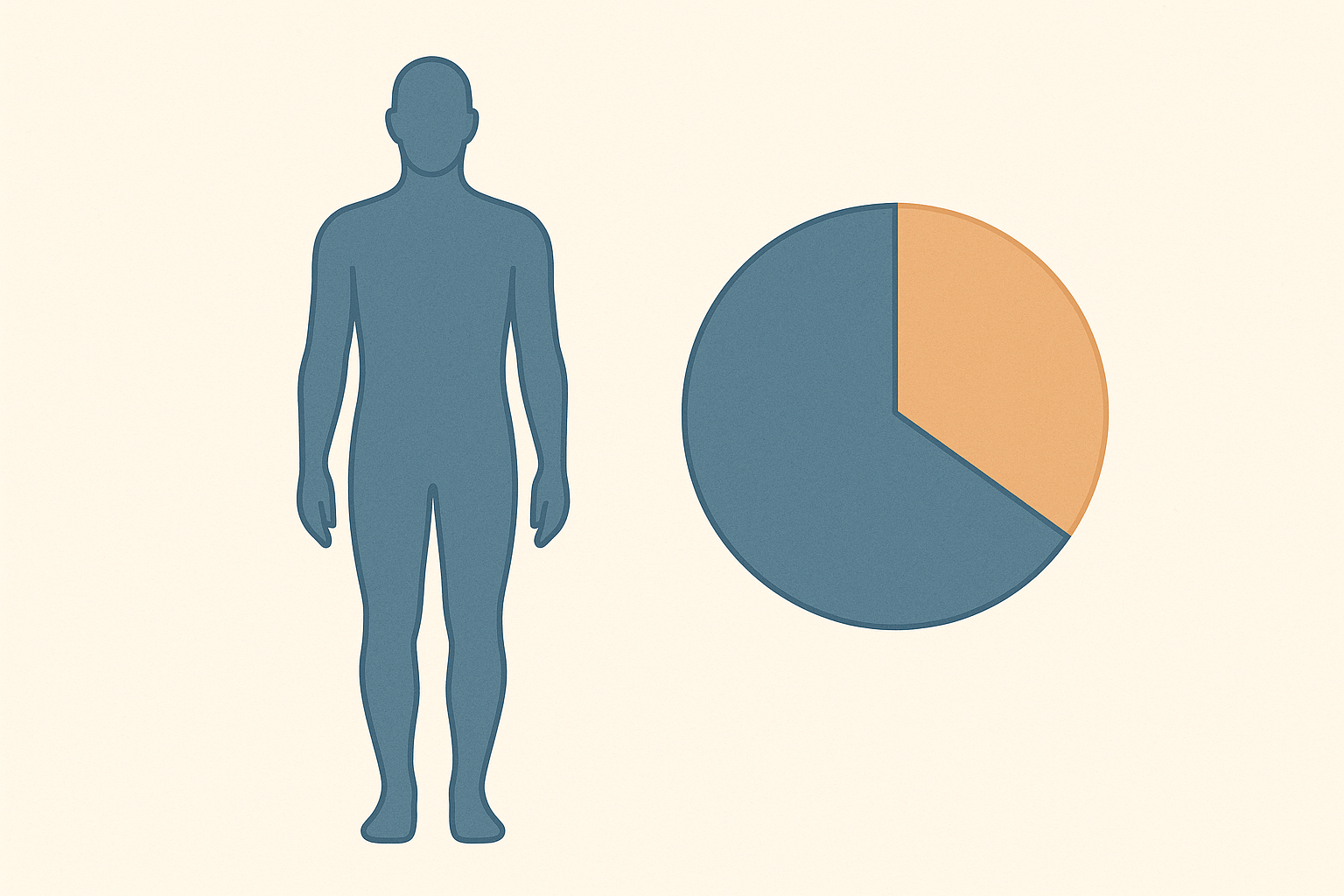
Body composition refers to the proportion of fat mass to lean mass (muscle, bone, organs, and water) in your body. When the goal is better health, losing fat while preserving muscle is generally what you're aiming for. Muscle supports metabolism, strength, mobility, and long-term function, so keeping it matters.
This is why a falling scale number isn't automatically good news. Rapid loss that includes a lot of muscle is rarely the outcome anyone wants. Conversely, a steady scale alongside a shrinking waistline and improving strength can reflect real, positive change.
When men pursue weight loss with medical support, including options a doctor may consider such as GLP-1 medication, appetite changes can lead to lower overall intake. That makes it especially important to pay attention to protein intake and resistance training, which are widely associated with preserving muscle during weight loss. A doctor can help you build a plan that focuses on fat loss while protecting lean mass, rather than simply chasing a lower number.
Body composition also connects to metabolic health markers that matter more than weight alone — things like waist circumference, blood sugar, and blood pressure, which a doctor can monitor over time.
Instead of fixating on daily scale readings, consider a broader set of signals:
Tools like body-composition scans exist, but they vary in accuracy. Used consistently and interpreted by a professional, they can add useful context — though no single tool tells the whole story.
The scale isn't useless — it's just incomplete. Used sensibly, it can show broad trends over weeks, which is genuinely informative. The trick is not to read too much into any single day's reading, since hydration, sodium, sleep, and meals all cause normal fluctuations. Weighing under consistent conditions and looking at weekly averages turns the scale into one useful signal among several, rather than a source of daily anxiety. Pairing it with measures like waist circumference and how you feel gives a far more accurate sense of whether you're heading in the right direction.
Focusing on body composition rather than scale weight isn't just about looking better — it's about health. Preserving muscle while losing fat supports metabolism, strength, and function over the long term, and reducing fat where it matters connects to metabolic health markers a doctor can track. These outcomes are more meaningful for your wellbeing than a single number ever could be. Keeping the bigger picture in view helps you make decisions — around protein, training, and overall approach — that serve your health, not just the readout on a bathroom scale.
It's worth speaking to a licensed doctor if you're starting a weight-loss journey, if your progress has stalled, or if you're losing weight quickly and want to make sure you're protecting muscle and overall health. A doctor can assess your situation, recommend appropriate monitoring, and discuss whether medical support is suitable for you.
Any weight-loss medication requires assessment and ongoing supervision by a doctor — it isn't about a quick result, but a monitored, sustainable plan.
If you want progress that reflects real health gains rather than just a falling number, a doctor can help you focus on what matters. Noah connects you with MOH-licensed Singapore doctors through discreet online consultations. Start a consultation to discuss a plan suited to you.
This article is for general education and is not medical advice. A consultation with a licensed doctor is required before any treatment.
For most people, the bathroom scale is the default measure of progress. But the number it shows can be misleading — especially during a structured weight-loss journey.