Hormonal Health
May 21, 2026
·
5 mins
read
Alcohol and Testosterone: What the Research Actually Shows


Alcohol's effect on testosterone is one of those areas where the popular narrative — "alcohol kills testosterone" — is partly true and partly oversimplified. Heavy use lowers testosterone substantially; moderate use has more nuanced effects. This guide separates the claims.
Alcohol's effect on testosterone is one of those areas where the popular narrative — "alcohol kills testosterone" — is partly true and partly oversimplified. Heavy use lowers testosterone substantially; moderate use has more nuanced effects. This guide separates the claims.
Chronic heavy drinking damages testicular Leydig cells (the cells that produce testosterone), suppresses the hypothalamic-pituitary axis that signals testosterone production, and increases aromatase activity (converting testosterone to oestrogen). The net effect is substantial suppression of testosterone, often by 30–40% or more in men with chronic heavy use.
In addition, heavy alcohol use suppresses sleep quality (specifically REM sleep, where most testosterone is produced), increases body fat (further suppressing testosterone), and is linked to mood changes that compound the symptom picture. The hormonal effect is real and clinically significant.
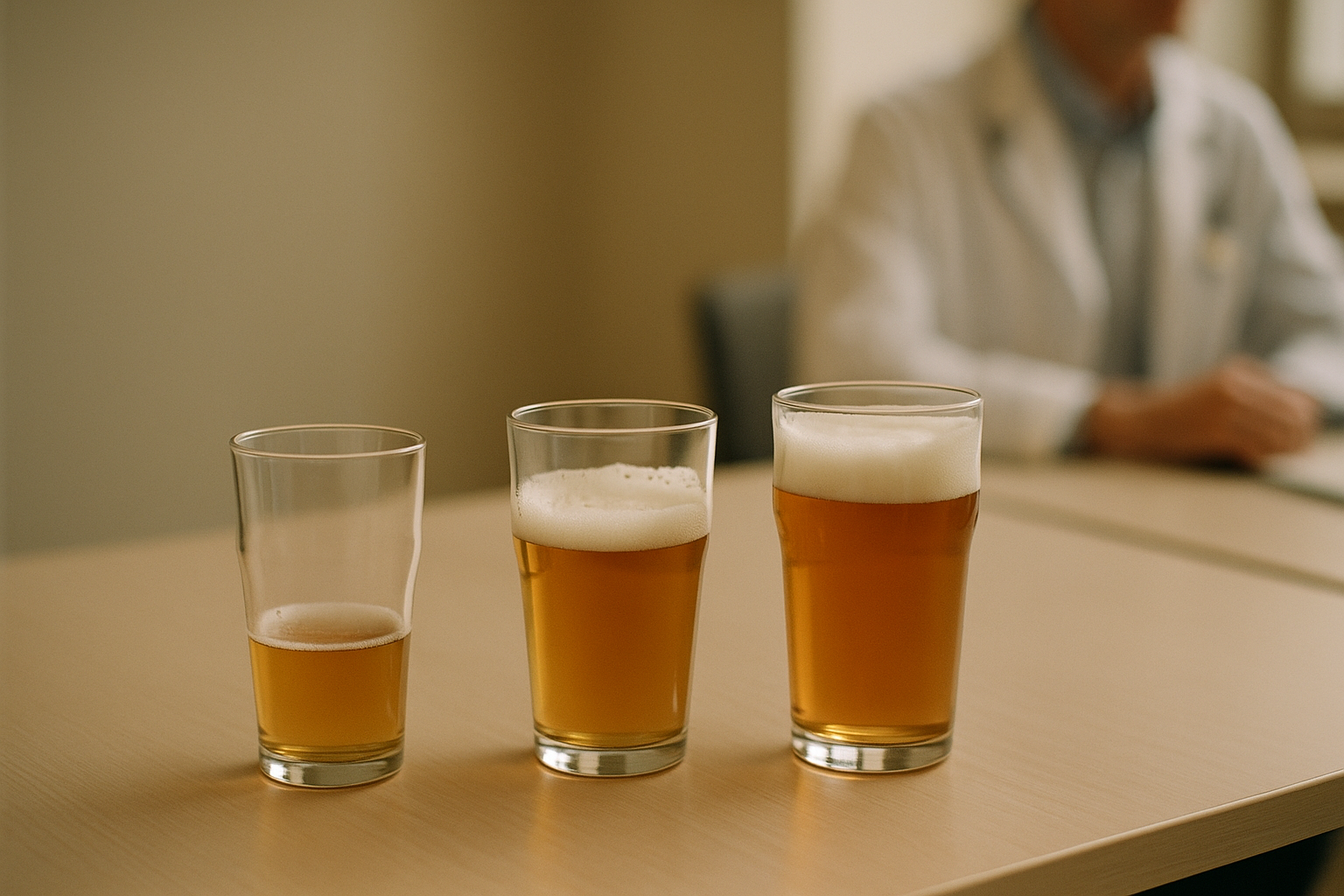
The picture for moderate drinking is more nuanced. Acute moderate alcohol intake (a drink or two) can cause a brief, modest reduction in testosterone over the following hours. Whether this matters in the long run depends on overall pattern.
Studies of moderate drinkers (often defined as roughly 1–2 drinks per day for men) generally don't show clinically meaningful effects on baseline testosterone. The hormonal effect appears to scale with both quantity and chronicity.
Major health bodies define "low-risk" drinking for adult men as roughly 14 standard drinks per week or fewer, with at least some alcohol-free days. Definitions vary slightly across guidelines. From a testosterone perspective specifically:
Even in men with normal testosterone, alcohol affects sleep architecture, body fat, mood, and cardiovascular and cancer risk. The non-testosterone reasons to moderate often outweigh the testosterone-specific ones.
If you're a heavy drinker concerned about testosterone, reducing intake is one of the highest-leverage moves available. Effects on hormones typically follow within weeks to months of meaningful reduction.
If you're a moderate drinker concerned about testosterone, the alcohol component is unlikely to be your main lever. Sleep, weight, training, and stress probably matter more.
Beer contains phytoestrogens from hops, but at consumption levels, this hasn't been shown to be clinically significant for testosterone. The bigger effect is the alcohol itself, regardless of source.
If you're a heavy drinker, yes — or at least substantially reduce. If you're a moderate drinker, the gains from cutting out completely are smaller and may not be the highest priority.
In men who substantially reduce heavy drinking, hormone improvements typically appear within weeks to a few months. The exact trajectory depends on baseline and degree of reduction.
If alcohol is part of your symptom picture and you want a clinical conversation, book a confidential consultation with a Singapore-licensed doctor on Noah.

Articles on Noah are for informational purposes only and do not replace medical advice from a qualified doctor. To consult on Noah, click here. Noah's editorial standards are described on our editorial standards page.

Emanuele MA, Emanuele N. Alcohol and the male reproductive system. Alcohol Research & Health. 2001.
Sierksma A, et al. Effect of moderate alcohol consumption on plasma testosterone. Alcohol Clin Exp Res. 2004.